



MAIN Blog
What monks and mushrooms tell us about flourishing in the midst of existential distress
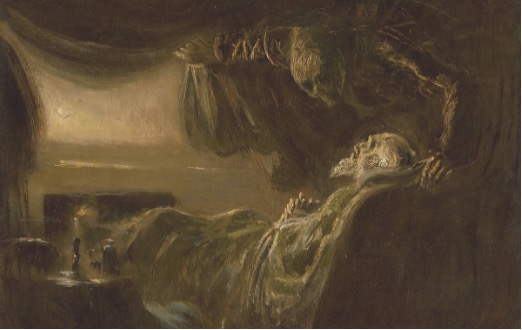
Until confronted with the realities of suffering, loss and uncertainty, many of us will have given little thought to death and dying. “Man is a creature who tries to deny his creatureliness,” declared anthropologist, Ernest Becker (Keen, 1974; p.71). The moment we then encounter the fragility of our mortality is often felt as an existential slap (Coyle, 2004), leaving us in a troubled state of turmoil in the face of our impermanence that impacts upon our physical, mental, relational and spiritual well-being (Pessin, et al, 2015).
Existential distress often evades our medicalised approaches and remains a common experience insufficiently addressed within our current therapeutic frameworks (Boston, et al, 2011; Niles, et al, 2021). In 2023, I undertook a Churchill Fellowship to explore two seemingly disparate approaches to existential suffering that turn out to have more in common than we might think: contemplative practice and psychedelic-assisted therapy. My hope being that, in caring for others in their confrontation with suffering and death, they may be supported, in the words of the existential psychiatrist, Dr Irvin Yalom (2008; p.9), “not to open some noisome Pandora’s box, but to re-enter life in a richer, more compassionate manner” – however long that life might be.
| Contemplative practices arose from our need to address the role of self in suffering and death and can broadly be thought of as forms of mental training in self-awareness, self-regulation, and self-inquiry to bring about a state of enduring well-being or inner flourishing (Davidson & Dahl, 2017). Most people would be familiar with the term mindfulness: the awareness that emerges through paying attention to the unfolding of present moment experience without judgment (Kabat-Zinn, 2003). | Psychedelic‐assisted therapy combines the perception-altering effects of a psychedelic substance, psilocybin being the most common in this setting, within the container of some form of supervised therapeutic framework, for example, Acceptance & Commitment Therapy (Shoshower, et al, 2019). During the 1960s, research into the role of psychedelics began “as a technique for altering the experience of dying”(Cohen, 1965; p.69) and is now rapidly expanding within the current psychedelic renaissance (Sessa, 2012). |
Yet, perhaps all suffering is existential. Since suffering has two components – the negative emotional experience of losing one’s sense of self (Tate & Pearlman, 2019) – our instinct is to try to hold on to this sense of self. However, the teaching from contemplative traditions and the research from psychedelic-assisted therapy both suggest another way. As existential psychiatrist, Dr Viktor Frankl, wrote: “When we are no longer able to change a situation – just think of an incurable disease such as an inoperable cancer – we are challenged to change ourselves” (p.116).
For those of us working in palliative care, how can we best support those we care for to approach this loss of sense of self in such a way that allows them to transcend their negative emotional experience and cultivate a more meaningful one so they may experience a richer, more compassionate life?

Connect to something beyond self
Contemplative and psychedelic practices both open to the possibility of what has been termed self-transcendent experiences – transient mental states marked by a loosening of our habitual sense of self accompanied by an expansive feeling of connectedness (Yaden, et al, 2017). The emotional underpinning of this is awe – the feeling of being in the presence of vast mysteries that transcend our current understanding (Keltner, 2023). The work of Dacher Keltner tells us that awe can be felt in relation to a number of “Wonders of Life” – moral beauty, wild awe, collective effervescence, music, sacred geometry, spirituality, epiphanies, even death – all of which serve to connect us back to the larger experience of Life or, in the words of Roshi Joan Halifax (2008; p.13), “an unbroken, intimate relationship with existence itself.” This experience of connectedness helps keep us grounded in the midst of suffering.
Cultivate a compassionate presence
Accompanying the mystical experiences of many during psychedelic-assisted therapy, researchers are now discovering the role of compassion in improving well-being (Zeifman, et al, 2025). Yet compassion – our sensitivity to suffering and commitment to alleviate it (Gilbert, 2020) – has always been the foundation of contemplative practice. Compassion combines an open and friendly awareness, or presence, to whatever is being experienced with an ethical intention to do what is needed. Often what is needed in times of suffering is to find better ways to be with our experience that allows it to be witnessed and held in the connectedness beyond our sense of self, creating more choice and possibility in how we respond.

Create meaning through surprise
When our habitual sense of self is quietened, we are then able to embark on something neuroscientists Norman Farb and Zindel Segal (2024) call sense foraging – the practice of intentionally engaging with sensation and welcoming its ability to update our models and expectations of the world. From the psychedelic research, this has been framed as surprise – a sensory mismatch between our expectations and our experience that leads to a change in meaning (De Felippo & Schmitz, 2024). It is this change of meaning that leads to healing, once described by pioneers within palliative care as the personal experience of the transcendence of suffering (Egnew, 2005).
My Churchill Fellowship report, What It Means to be Human, is an attempt to understand the existential underpinnings of who we are and how this might improve the care we give to those suffering with existential distress. Regardless of whether we become experts in contemplative practice or undertake psychedelic-assisted therapy, I believe our work in attending to existential distress is to provide a safe container for the compassionate witnessing of what otherwise is too overwhelming to feel. Of course, this also requires our own relationship with suffering, loss and uncertainty to be addressed; work that is much needed within our teams and organisations that will ultimately benefit those we care for. In the words of botanist, Robin Wall Kimmerer (2020), all flourishing is mutual.
References:
Boston P, Bruce A & Schreiber R. (2011). Existential suffering in the palliative care setting: an integrated literature review. Journal of Pain and Symptom Management. 41(3):604-18.
Cohen, S. (1965). LSD and the Anguish of Dying. Harper’s Magazine. 231(1384):69-78.
Coyle, N. (2004). The existential slap—A crisis of disclosure. International Journal of Palliative Nursing. 10:520.
Davidson R.J. & Dahl C.J. (2017). Varieties of Contemplative Practice. JAMA Psychiatry. 74:121–123.
De Filippo R & Schmitz D. (2024). Synthetic surprise as the foundation of the psychedelic experience. Neuroscience & Biobehavioral Reviews. 157:105538.
Egnew, T.R. (2005). The meaning of healing: transcending suffering. Annals of Family Medicine. 3(3):255-62.
Farb, N. & Segal, Z, (2024). Better in Every Sense: How the New Science of Sensation Can Help You Reclaim Your Life. London, UK: Yellow Kite Books.
Frankl, V.E. (1988). The Will to Meaning: Foundations and Applications of Logotherapy. New York, NY: New American Library.
Gilbert, P. (2020) Compassion: From its evolution to a psychotherapy. Frontiers in Psychology. 11:586161 doi: 10.3389/fpsyg.2020.586161
Halifax, J. (2008). Being With Dying: Cultivating Compassion and Fearlessness in the Presence of Death.
Kabat-Zinn, J. (2003). Mindfulness-based interventions in context: Past, present, and future. Clinical Psychology: Science and Practice, 10(2), 144–156.
Keen, S. (1974). A conversation with Ernest Becker. Psychology Today. April, 71-80.
Keltner, D. (2023). Awe: The Transformative Power of Everyday Wonder. London, UK: Penguin Books.
Niles, H, et al. Palliative care provider attitudes toward existential distress and treatment with psychedelic-assisted therapies. BMC Palliat Care 20, 191 (2021).
Pessin, H, et al. (2015). Existential distress among healthcare providers for patients at the end of life. Current Opinion in Supportive & Palliative Care. 9:77-86.
Sessa, B. (2012). The psychedelic renaissance: reassessing the role of psychedelic drugs in 21st century psychiatry and society. Muswell Hill Press.
Sloshower, J, et al. (2019). Psilocybin-assisted therapy of major depressive disorder using Acceptance and Commitment Therapy as a therapeutic frame, Journal of Contextual Behavioral Science. S2212-1447(19)30121-8.
Tate, T. & Pearlman, R. (2019). What we mean when we talk about suffering and why Eric Cassell should not have the last word. Perspectives in Biology and Medicine. 62(1):95-110.
Wall Kimmerer, R. (2020). Braiding Sweetgrass: Indigenous Wisdom, Scientific Knowledge and the Teachings of Plants. UK: Random House.
Yaden, D. B., Haidt, J., Hood, R. W., Vago, D. R., & Newberg, A. B. (2017). The Varieties of Self-Transcendent Experience. Review of General Psychology, 21(2), 143-160.
Yalom, I.D. (2008). Staring At The Sun: Overcoming the Terror of Death. San Francisco, CA: Jossey-Bass.
Zeifman, R., Danias, G., Agin-Liebes, G., Pagni, B., Kettner, H., Bhat, V., Ross, S., Erritzoe, D. & Carhart-Harris, R. (2025). Psychedelic Therapy, Positive Emotional Experiences, and the Central Role of Self-Compassion. Research Square. doi: 10.21203/rs.3.rs-7420529/v1
About the blog author:
Dr Dave Bradley is a GP in palliative care and mindfulness teacher. His Churchill Fellowship allowed him to him to travel to the USA and Canada where he spent time with contemplative care organisations, neuroscientists and psychedelic researchers.

Published: Oct 21, 2026
Other blogs
- From Research to Practice: Developing Neuroinclusive Support in Hospice Care
- ‘I Love My Job’: Why We Need to Rethink Wellbeing Support for Healthcare Assistants in Palliative Care
- Rewilding Healthcare in Advanced Illness: An Invitation to Reimagine the Possibilities
- From Conversation to Collaboration: What happens after a MAIN Grant Planning and Networking Workshop?
- MAIN Grant Writing and Networking Workshop - Grant writing and creativity
- MAIN Grant Planning and Networking Workshop - Reflections and learning
- Welcome to our new blog site!
- Coming soon…